 how-to
How to Fix a Garage Door That Is Stuck
Last Updated: October 30, 2026
Quick Summary
A stuck garage door usually comes down to power, lock mode, or a mechanical failure such as a snapped spring, a slipped cable, or a bent track. Check the wall button, remote batteries, breaker, and lock icon first, since lock mode disables remotes on purpose. If the door feels heavy or the opener hums without moving it, stop and call a professional.
- Lock mode trips more people up than any other setting and is easy to bump.
- Never try to wind, unwind, or replace a torsion spring yourself.
- Misaligned photo-eyes cause more stuck doors than any other single part.
- If the door closes only when you hold the wall button, the sensors are the problem.
- A snapped spring or a door off its track is a same-day call.
Table of Contents
- Why Is My Garage Door Stuck? Common Causes
- Garage Door Broken Spring Symptoms to Watch For
- How to Release a Jammed Garage Door Safely
- Garage Door Opener Troubleshooting: What to Check First
- When Your Garage Door Won't Open All the Way
- When to Call a Professional for a Stuck Garage Door
- Frequently Asked Questions
Why Is My Garage Door Stuck? Common Causes
A stuck garage door stops moving, reverses without warning, or refuses to open or close when you press the button. The cause usually comes down to power, lock mode, or a mechanical failure.
Power, Remote, and Lock Mode Issues
Before you assume the worst, check the boring stuff. A dead remote battery, a tripped breaker, or a wall switch in vacation lock mode will make a healthy door look broken.
Run through this checklist:
- Press the wall-mounted button, not just the remote
- Replace remote batteries
- Check the breaker and the outlet the opener plugs into
Lock mode trips more people up than any other setting. It is a small switch or button that disables the remotes on purpose, and it is easy to bump.
Mechanical Problems: Springs, Cables, and Tracks
If the opener hums but the door does not move, or the door feels heavy and jerky, the problem is mechanical. Three parts cause most of it:
- Torsion or extension springs that have snapped
- Cables that have slipped off the drum or frayed
- Tracks that are bent, misaligned, or clogged with debris
A common mistake is forcing a door with a broken spring. The opener is not built to lift the door's full weight, and pushing it can strip the gear or burn out the motor. If the door feels unusually heavy by hand, stop.
Garage Door Broken Spring Symptoms to Watch For
A broken spring is the most common serious cause of a stuck door. You will usually hear a loud bang from the garage, and after that the door will not lift or will only rise a few inches.
Watch for these signs:
- A loud snap or bang, often mistaken for a car backfire
- A visible gap in the torsion spring above the door
- The door feels extremely heavy when lifted by hand
Watch out: never try to wind, unwind, or replace a torsion spring yourself. These springs store enough energy to cause serious injury, and this is the single most dangerous repair on a garage door.
How to Release a Jammed Garage Door Safely
The safe way to release a jammed door is to pull the manual release cord, but only after you confirm the door is not under tension from a broken spring.
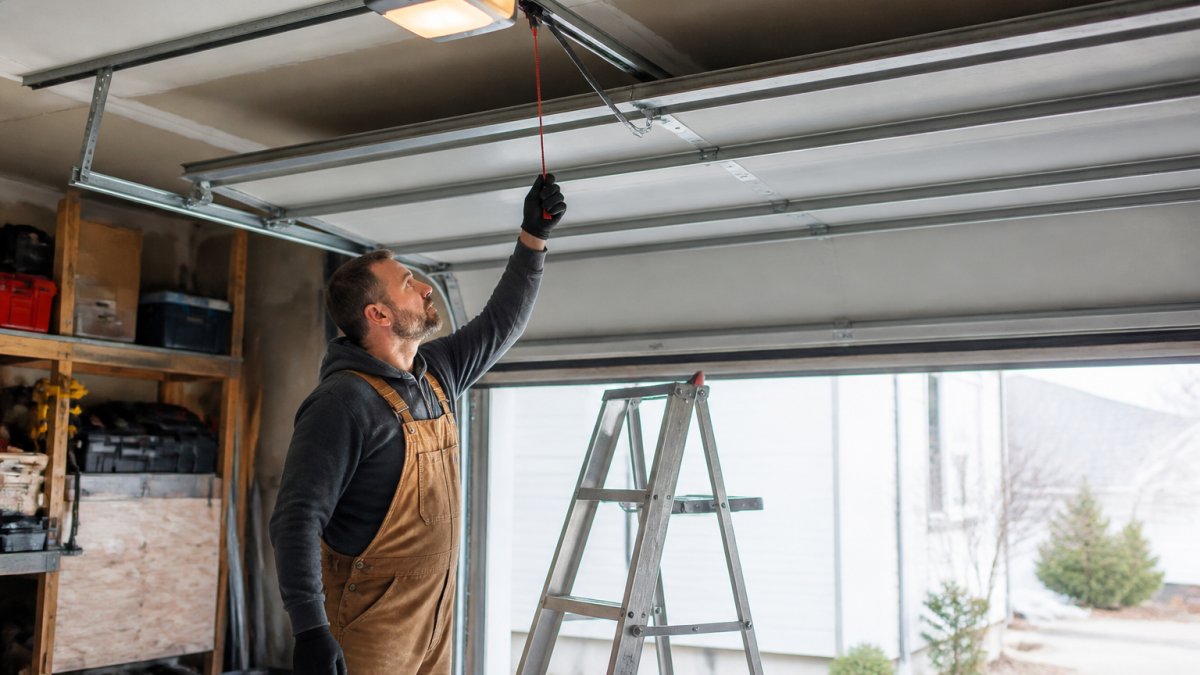
Here is the safe sequence:
- Make sure no one is standing under the door
- Confirm the door is fully closed and the spring looks intact
- Pull the red release cord straight down
- Lift the door slowly by hand to test its weight
- If it moves freely, you can open it manually until help arrives
If the door is heavy or will not budge, do not force it, that signals a failed spring or cable. Knowing the manual release procedure in your opener's owner's manual is worth doing before an outage hits.
Garage Door Opener Troubleshooting: What to Check First
Garage door opener troubleshooting starts with the sensors, because misaligned photo-eyes cause more stuck doors than any other single part. But sensors are only the first layer, force settings, travel limits, and lock mode can each make a healthy door look broken.
Work through these layers in order, and stop as soon as the door behaves.
Layer 1: The Safety Reverse System
- Wipe the sensor lenses clean with a dry cloth
- Confirm both LEDs are solid, not blinking, a blinking LED means misalignment or a blocked beam
- Look for anything in the beam path, including a broom, trash can, or a sagging track that drops the sensor out of line
If the door closes only when you hold the wall button, the sensors are the problem. That is a built-in override on most openers, not a fix.
Layer 2: Force and Travel Limits
Every opener has two adjustable settings: force (how hard it pushes before giving up) and travel limits (how far it goes up and down). When either drifts, the door stops partway, reverses for no visible reason, or refuses to close the last few inches.
- Force setting too low: the door stops or reverses when it meets normal resistance, such as a stiff roller or a cold-weather seal.
- Force setting too high: the opener keeps pushing through a real obstruction, which is a safety hazard and can damage the door.
- Travel limit too short: the door stops before reaching the floor or the fully open position.
Most openers walk you through limit and force adjustment in the owner's manual. Adjust in small increments and test after each change.
Layer 3: Lock Mode and Wall Control
If the wall button works but the remotes and keypad do not, the opener is almost certainly in lock mode. On most models this is a small switch or a long-press on the wall control that lights a lock icon and disables all remote transmitters. Press and hold the lock button until the icon goes out, then test a remote.
Layer 4: Power, Logic Board, and Error Codes
- Confirm the opener is plugged into a working outlet and the breaker has not tripped. A GFCI outlet on the garage circuit is a frequent culprit, reset it at the outlet.
- Check for a flashing LED pattern on the motor head or wall control. Most modern openers blink a diagnostic code that maps to a specific fault in the manual. Count the flashes before you call anyone; it saves diagnostic time.
- Listen for grinding or humming without movement, which points to a stripped gear, a failed capacitor, or a motor that is trying to move a door it cannot lift.
If you have worked through all four layers and the door still will not move reliably, the problem is mechanical or in the opener's logic board.
When Your Garage Door Won't Open All the Way
A door that opens partway and stops usually has a travel-limit problem, a binding track, or a failing spring. When your garage door won't open all the way, the door is telling you something is resisting it, and the opener is protecting itself by stopping.
The usual suspects:
- Travel limits set too short on the opener
- A binding track or a roller that has popped out
- A weakening spring that can no longer lift the full door
Adjusting travel limits is a homeowner-friendly fix on most openers, and the manual walks you through it. Track and spring issues are not. If the door binds or feels heavy, stop adjusting and get it looked at.
When to Call a Professional for a Stuck Garage Door
Call a professional when the door is heavy, a spring is broken, a cable is off, or the door has come off its track. These are the repairs that cause injuries, and they are not DIY jobs. What most homeowners actually need is a way to sort a stuck door into three buckets: fix it yourself in five minutes, schedule a repair this week, or stop and call now.
Stop and Call Now: Safety-Critical Faults
These conditions mean the door can injure someone or damage itself if operated. Do not run the opener, and do not try to force the door by hand.
- A snapped torsion or extension spring. You may have heard a loud bang; the door will be extremely heavy or will not lift. Winding or unwinding one is the single most dangerous repair on a garage door.
- A cable that is off the drum, hanging loose, or frayed. Cables are under high tension and can whip when they fail.
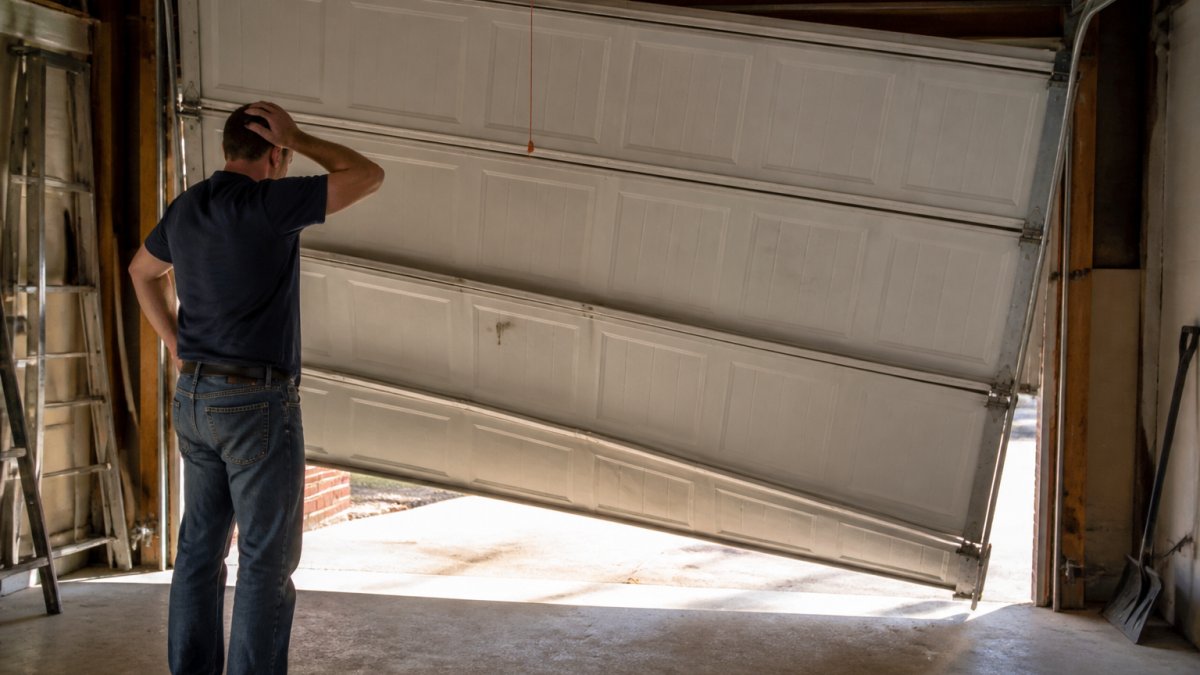
- A door that is crooked, binding, or off its track. Operating it can bend panels, break rollers, and bring the door down.
Schedule a Repair This Week: Mechanical Wear
These faults usually let the door operate, but they get worse and cost more the longer they are ignored.
- A door that opens partway and stops, or closes only when you hold the button
- Grinding, squealing, or popping noises during travel
- A remote or keypad that works only intermittently after a battery change
Likely DIY: Settings and Simple Adjustments
A dead remote battery, a tripped GFCI outlet, a wall control in lock mode, misaligned photo-eyes, and travel-limit drift are all homeowner-fixable with the owner's manual. If you have worked through the opener troubleshooting section and the door still misbehaves, you have moved past the DIY bucket.
What Repairs Typically Cost and How Urgent They Are
Pricing depends on door type, opener model, and the specific repair needed.
Urgency matters more than price.
Contact JR Doors and More LLC if you see any of these:
- A snapped spring or a cable hanging loose
- A door that is crooked or off its track
- Repeated opener failures after resetting
For homeowners in our area, you can explore our garage door services to see how we can get your door working again.
The International Door Association is a good resource for finding trained technicians and understanding industry standards.
Sort a stuck door into one of three buckets before you pick up the phone.
| Bucket | Signs | Urgency |
|---|---|---|
| Stop and call now | Snapped spring, cable off drum, door off track | Same-day call |
| Schedule a repair this week | Grinding noises, door stops partway, door slams down | This-week call |
| Likely DIY | Dead remote battery, tripped GFCI, lock mode, misaligned photo-eyes | Whenever-you-can call |
Frequently Asked Questions
How do I release a jammed garage door?
Pull the red manual release cord hanging from the opener rail. That disconnects the door from the motor so you can lift it by hand. Do this only when the door is fully closed and no one is standing under it. If the door feels extremely heavy or won't budge, a broken spring is the likely cause, and forcing it can cause injury. In that case, stop and call a professional for a stuck garage door.
Can I open my garage door if the power is out?
Yes. Use the manual release cord to disconnect the opener, then lift the door by hand. Most doors are balanced enough to lift with moderate effort when the springs are working. Keep a key for the side entry door accessible so you can reach the release cord during an outage.
What are the signs of a broken garage door spring?
A loud bang from the garage, a door that feels extremely heavy when lifted by hand, a visible gap in the torsion spring above the door, or a door that opens a few inches and stops are all common garage door broken spring symptoms. Never try to replace a spring yourself. Torsion springs are under high tension and require proper tools and training to replace safely.
When should I call a professional for a stuck garage door?
Call a professional if the door is off its tracks, a spring or cable is broken, the door is crooked, or it won't move even after you release it manually. These issues involve high-tension parts that can cause serious injury. A trained technician can diagnose the problem, explain repair options, and confirm whether a repair or replacement makes more sense for your budget.
A stuck door is stressful, but it is rarely a mystery once you know where to look. If troubleshooting has run its course and the door is still stuck, do not force it. JR Doors and More LLC can diagnose the problem, fix broken springs and cables safely, and set you up with a preventive maintenance program so the next failure does not catch you off guard. Get started with JR Doors and More LLC and get your garage back to normal.
