 blog
Best Garage Door Brands for Homes: A Homeowner's Comparison Guide
Last Updated: October 30, 2026
Quick Summary
The best garage door brands for homes combine solid construction, honest warranty coverage, and a local dealer network that can service what they sell. We install and repair doors, and the brand on the label matters less than parts availability, insulation quality, and nearby service. A premium door with a rushed install can underperform, while a mid-tier door fitted correctly can last decades.
- Judge every brand on four documents: the warranty, parts catalog, insulation spec sheet, and dealer list.
- A long warranty that excludes the parts most likely to fail isn't worth much.
- A cheaper door that's hard to repair often costs more over its service life.
- For most cold-climate homes, insulated steel is the practical pick.
- If an installer can't produce a license number or quotes without measuring, treat that as a signal.
Table of Contents
- What Separates the Best Garage Door Brands for Homes
- Garage Door Brand Comparison: What to Weigh Before You Buy
- Garage Door Materials: Steel, Wood, Composite, and Aluminum
- Insulated Garage Doors and Climate-Specific Performance
- Questions to Ask a Garage Door Installer Before You Choose a Brand
- Get a Brand and Fit Assessment for Your Garage Door
- Frequently Asked Questions
What Separates the Best Garage Door Brands for Homes
The best garage door brands for homes combine solid construction, honest warranty coverage, and a local dealer network that can actually service what they sell.
Here's the uncomfortable truth most brand roundups skip: a door is only as good as its installation and the dealer behind it. A premium door with a rushed install can underperform, while a mid-tier door fitted correctly can last decades.
Below, we break down how the major categories of garage door brands compare, what to check before you sign, and how to match a door to your climate and budget.
Garage Door Brand Comparison: What to Weigh Before You Buy
A garage door brand comparison should start with three things: warranty terms, repairability, and total cost of ownership. Style and color matter, but they're the easy part. The hard part is what happens five years in when a panel is dented or an opener fails.
Most roundups rank brands by reputation and stop there, that's a popularity contest, not a comparison. A useful comparison puts each brand's warranty, parts line, insulation options, and dealer support side by side, then asks which fits your opening, climate, and service expectations.
Warranty Terms and Exclusions by Product Tier
Warranty coverage varies widely by tier, and the fine print is where brands separate themselves. Entry-level steel doors often carry shorter limited warranties on finish and hardware, while premium lines extend coverage on the door sections themselves. Ask specifically what's excluded: labor, finish fading, and hardware are common carve-outs. A long warranty that excludes the parts most likely to fail isn't worth much.
A practical way to compare: ask each brand for the warranty document, not the marketing summary, and read three lines, section coverage, hardware coverage, and finish coverage. Then ask whether it's prorated and whether it transfers to a new homeowner; a transferable warranty is a real resale asset.
Reliability, Repairability, and Total Cost of Ownership
Reliability comes down to construction quality and whether replacement parts are easy to source. A door needing a full panel replacement because one section was discontinued costs far more over its service life than one with a deep, well-stocked parts line. Total cost of ownership includes purchase, installation, maintenance, and repairs, a cheaper door that's hard to repair often costs more in the long run.
What to Compare | Why It Matters | What to Ask |
|---|---|---|
Warranty terms | Reveals confidence in the product | What's excluded, and for how long? Is it prorated or transferable? |
Parts availability | Affects repair cost and speed | Can individual sections be reordered? Who stocks them locally? |
Insulation rating | Drives energy efficiency | What R-value does this line carry, and is there a thermal break? |
Dealer network | Determines service quality | Who services this brand locally, and are they authorized? |
Finish options | Ties to curb appeal | How many colors and finishes, and what's the finish warranty? |
Installation model | Affects accountability | Does the seller install and service, or subcontract? |
Garage Door Materials: Steel, Wood, Composite, and Aluminum
Steel construction dominates the residential market for good reason: it's durable, low-maintenance, and takes a wide variety of finishes well. Wood offers warmth and customization but demands more upkeep, while composite and aluminum fill specific niches.
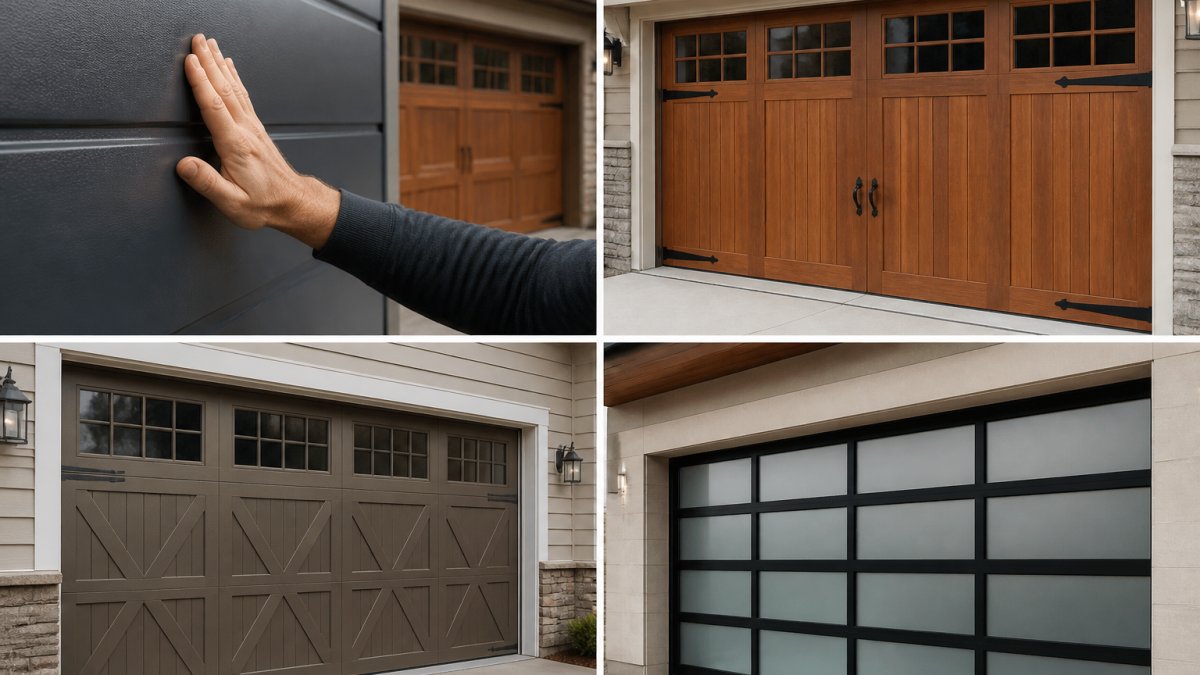
Steel doors stand up to harsh weather and resist dents better than aluminum, which is lighter but more prone to denting. Wood doors deliver traditional design and real curb appeal but need refinishing to survive freeze-thaw cycles.
Insulated Garage Doors and Climate-Specific Performance
Insulated garage doors matter most where winters bite. Insulation affects thermal performance, keeps the garage warmer, and reduces noise.
Matching Insulation to Your Climate
In a cold climate, prioritize solid insulation and a thermal break to prevent the frame from conducting cold. If your garage sits under living space or holds a workshop, better insulation pays off in comfort and efficiency; if it's detached and unheated, weigh insulation against budget. Ask your installer what R-value fits your setup rather than buying the thickest door on the lot.
Questions to Ask a Garage Door Installer Before You Choose a Brand
Before you commit to any garage door brand, interview the installer. The questions below separate a careful professional from a quick sale, and they cover the two things brand roundups almost always skip: whether the installer is qualified, and whether the door is compatible with your existing opening.
Verify the Installer, Not Just the Brand
- Are you licensed and insured for garage door installation and repair in this jurisdiction?
- Are you an authorized dealer for the brands you carry, or do you source them secondhand? Authorized status affects warranty validity on many brands.
- How long have you been installing and servicing doors in this area? Local tenure matters when a spring fails in a cold snap and you need same-week service.
- Can you provide references from installs similar to mine, same door type, same opening size, same climate exposure?
- Who actually performs the work: your employees or subcontractors? Accountability changes depending on the answer.
Verify Compatibility With Your Existing Opening
- Will you measure the opening, headroom, and side room before quoting, or are you quoting from my description?
- Does my existing track, torsion system, and opener support the door weight and size you're recommending, or will those need replacement too?
- If I'm keeping my opener, is it rated for the new door's weight and does it have the safety features required for the door type?
- Can you confirm the door I'm buying is available in my opening size without custom lead times, or will this be a custom order?
- What's the lead time on a replacement door or new construction order, and what's the current backlog?
Verify the Quote and the Warranty Path
- What's included in the price quote, and what's billed separately, old door removal, disposal, trim, opener, labor?
- How do you handle warranty claims, and who files them: me, you, or the manufacturer?
- Do you offer a preventive maintenance program, and what does it cover, springs, rollers, lubrication, balance check?
- Can you show me how insulation and door size affect performance for my specific garage opening, rather than quoting a generic R-value?
A good installer answers these without flinching. A great one asks how you use the garage, whether it's heated, under living space, or used for daily parking versus seasonal storage. That conversation is worth more than any brand ranking.
Get a Brand and Fit Assessment for Your Garage Door
Choosing among garage door brands is really a fit question: your climate, home exterior, budget, and how long you plan to stay. We carry Garaga and Overhead Door products and LiftMaster openers. You can see our products and services to check what fits your project before you commit to a brand.
Frequently Asked Questions
Which garage door brand is best for a home?
There is no single best garage door brands pick for every home. The right choice depends on your climate, budget, and how long you plan to stay. Look for a manufacturer with a clear warranty tier structure, a local dealer who installs and services the door, and a product line that includes insulated options for your region. An authorized dealer can walk you through fit and finish options.
Are insulated garage doors worth considering?
Insulated garage doors help in two ways: they reduce heat loss through the garage and they quiet the door in operation. An insulated door can help keep an attached garage warmer. The payback depends on how the garage is used and whether it shares a wall with living space, so ask your installer which insulation level fits your home.
What should I ask a garage door installer before choosing a brand?
Ask which brands they are authorized to sell and service, what warranty support they provide after installation, and whether they handle spring and opener repairs on the brands they install. Also ask for proof of insurance and licensing, how long installation takes, and whether they will assess your existing door before recommending replacement.
How long do residential garage doors typically last?
A well-maintained steel or composite door often lasts 15 to 20 years or more, while wood doors need more frequent refinishing to reach that range. Springs, cables, and openers wear out sooner and are replaced separately. Preventive maintenance, including annual balance and lubrication checks, extends service life and catches worn parts before they fail. Ask your installer about a maintenance program when you buy.
The right door starts with the right assessment. JR Doors and More LLC offers custom installation, preventive maintenance programs, and honest guidance on whether to repair or replace, backed by our work as an authorized dealer for Garaga and Overhead Door doors and LiftMaster openers. Get started with JR Doors and More LLC and choose a door that fits your home, your climate, and your budget.