 blog
What Garage Door Spring Replacement Costs Homeowners
Table of Contents
- What Drives the Cost of Garage Door Spring Replacement
- Torsion Spring Replacement Cost Versus Extension Springs
- Garage Door Spring Replacement Labor Cost and What a Quote Includes
- Garage Door Spring Replacement Time and When Both Springs Should Go
- DIY Garage Door Spring Replacement Safety and Warranty Trade-Offs
- Schedule a Spring Assessment With JR Doors and More LLC
- Frequently Asked Questions
Last Updated: October 30, 2026
What Drives the Cost of Garage Door Spring Replacement
The cost of garage door spring replacement depends on three things: how many springs you have, how big each spring is, and how much the door weighs. At JR Doors and More LLC, we price off those inputs rather than a flat rate, because a light single-car door and a double insulated door are not the same repair.
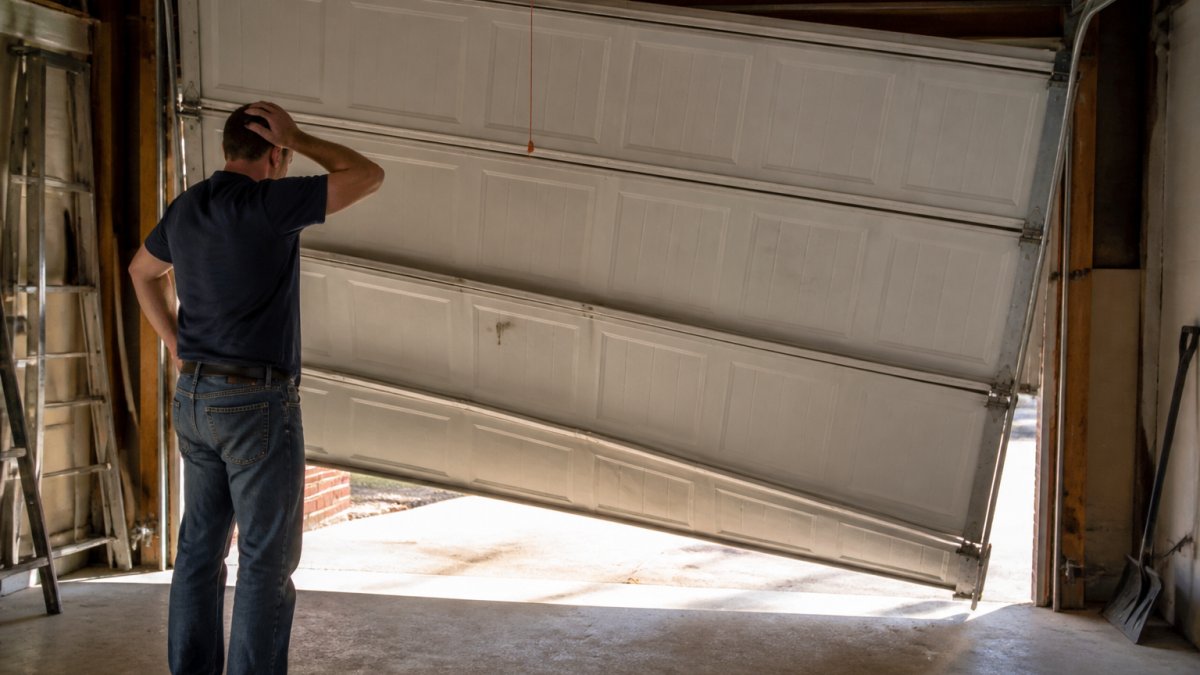
A garage door spring is the tensioned steel coil that counterbalances the door's weight, letting a person or opener lift a door that would otherwise be far too heavy. When it snaps, the door usually will not open.
Spring Count and Spring Size
Two variables set the baseline: the number of springs and the size of each one. Spring size means length and wire gauge, and heavier wire holds more tension, so it costs more.
- Single-spring doors: one spring carries the whole load. Common on lighter, non-insulated single-car doors.
- Double-spring doors: two springs share the load. Common on wider or insulated doors.
Our current cost depends on the number of springs and the size of the springs (length and wire size). Pricing depends on the specific door, so contact JR Doors and More LLC for a current quote.
Door Weight, Insulation and Cycle Life
A heavier door needs a stronger spring system, and insulation is the usual reason a door gets heavy. An insulated double door takes larger springs and more of them.
Cycle life matters too. A spring is rated for a number of open-and-close cycles, and higher-cycle springs cost more up front but last longer, usually the better buy for heavy daily use.
Torsion Spring Replacement Cost Versus Extension Springs
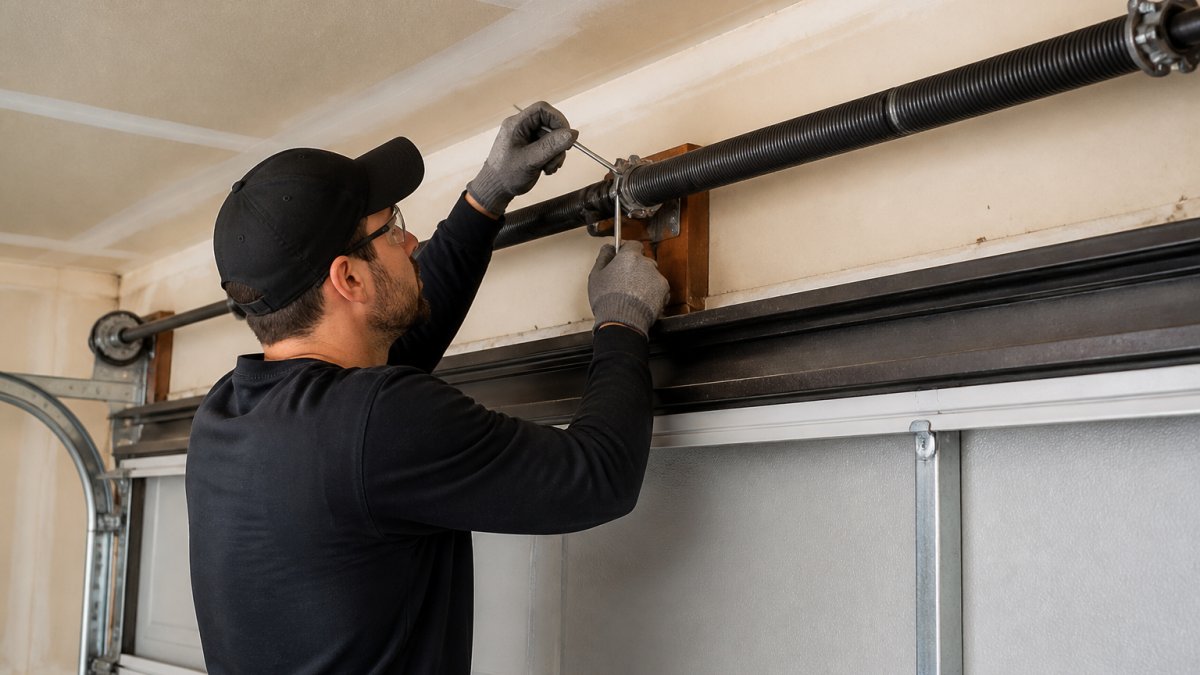
Torsion springs mount above the door on a horizontal shaft and twist to store energy. Extension springs run along the side tracks and stretch.
Torsion systems generally cost more to service because the spring is under high tension and the job requires controlled winding with the right bars.
What most guides miss is that the system type is not really the price driver, the spring specification is.
The Spring Specifications That Move the Price
When a technician sizes a spring, four measurements do most of the work, each changing parts cost and sometimes labor time.
- Wire gauge (wire size): the thickness of the steel. Heavier wire holds more torque, so a heavier door needs thicker wire, which costs more per spring.
- Inside diameter: the coil's inner measurement. A smaller diameter on the same wire stores more energy, which is why diameter and wire gauge are always quoted together.
- Length: the free length of the coil. Longer springs on the same wire carry more cycles, so length is tied directly to how long the spring lasts.
Why Two Quotes for the "Same" Door Differ
A door's weight sets all four specifications. An insulated double door weighs more than a bare single door, so it needs larger wire, a longer coil, or two springs instead of one. That is why our cost depends on the spring specification, which changes with the door.
A torsion conversion, where an older extension-spring door is switched to a torsion system, is a different job again. It involves a new shaft, drums, and end plates, so it is priced as a system change rather than a spring swap. Ask whether a quote is a like-for-like replacement or a conversion before you compare it to anything else.
Garage Door Spring Replacement Labor Cost and What a Quote Includes
Labor is part of the installed price, and it moves with the difficulty of the job: spring count, spring size, and how accessible the hardware is.
The bigger problem homeowners run into is not the labor rate itself, it is that two quotes for the "same" job can land hundreds of dollars apart because they are not quoting the same scope. Force every estimate into the same line-item format so you can compare apples to apples.
How to Read an Itemized Spring Replacement Quote
Ask each company to break the estimate into these lines. If a bidder will not, that is your answer.
Quote Line | What It Should Tell You | Red Flag If Missing |
|---|---|---|
Spring specification | Type (torsion or extension), inside diameter, length, wire gauge, and cycle rating | Quote says only "one spring" or "springs" |
Parts cost | Price of the spring(s) separately from labor | Parts and labor lumped into one number |
Labor charge | Flat rate or hourly, and what it covers | No labor line at all |
Trip or service-call fee | Whether a dispatch fee applies and whether it is credited toward the repair | Fee disclosed only after arrival |
Safety inspection | Whether cables, drums, rollers, hinges, and the opener are checked | Inspection offered only as an upsell |
Disposal | Whether old springs are hauled away | Old springs left at the curb |
Add-ons | Any recommended extras (bearing plates, center bracket, high-cycle upgrade) priced individually | Bundled "package" pricing that hides the add-on cost |
Comparing Two Quotes Side by Side
A common pattern is for one quote to look cheaper because it uses a lower-cycle spring, skips the safety inspection, or charges a trip fee the other quote folds in. Before you pick the lower number, check three things:
- Same spring specification? A standard-cycle spring and a high-cycle spring are not the same product, even if both are described as "torsion springs."
- Same scope? One quote may include cable and roller inspection; the other may charge for it separately once the tech is on site.
Watch out: a verbal estimate with no spring specification is the most common way homeowners get surprised. Without the spring size, you cannot compare bids or tell whether the difference is labor, parts, or scope.
Garage Door Spring Replacement Time and When Both Springs Should Go
A single spring replacement is a short job, typically completed in one visit. A double-spring job takes longer because each spring is wound and balanced separately.
Here is the decision most homeowners face: replace one spring or both?
Situation | What We Recommend | Why |
|---|---|---|
Both springs same age, one broke | Replace both | Matched wear, one service call |
Second spring recently replaced | Replace the broken one | Other spring is newer |
Door feels unbalanced after one swap | Replace as a pair | Even tension keeps the door level |
Heavy daily use | Upgrade cycle rating | Longer life between repairs |
If the door still feels heavy or drifts when you let go, the springs are not balanced to the door. That is a setup problem, not a parts problem.
DIY Garage Door Spring Replacement Safety and Warranty Trade-Offs
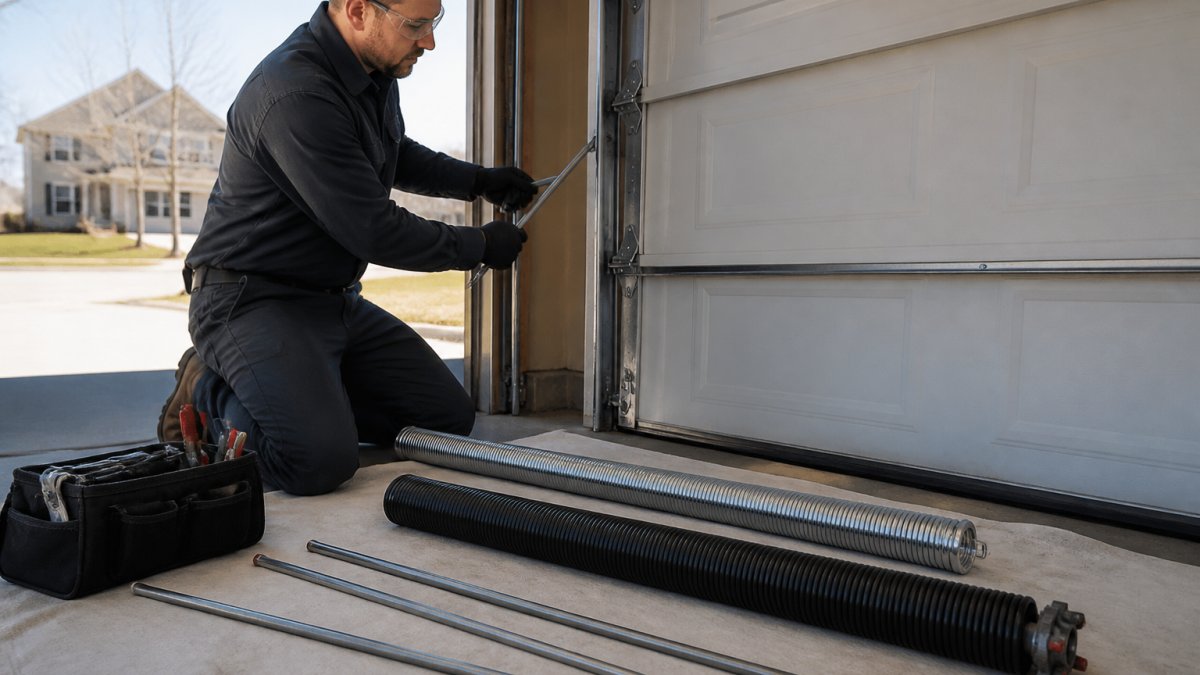
DIY garage door spring replacement safety is the reason most manufacturers and repair pros advise against it.
The trade-offs are real:
- Cost: doing it yourself saves the labor charge, but you still buy the springs and winding bars.
- Risk: a spring under tension can injure hands, face, and arms if it slips.
- Warranty: a self-installed spring often voids the parts warranty, and a mistake can damage cables or the opener, turning a small repair into a large one.
A common mistake is assuming a "quiet" door means the springs are fine. A worn spring can stay quiet right up until it breaks. If you are not trained on winding bars and tension, professional repair is the safer path.
Schedule a Spring Assessment With JR Doors and More LLC
A snapping spring is a safety issue, not just an inconvenience. The good news is that the fix is predictable once someone names the spring type, count, and size on your door.
At JR Doors and More LLC, we service residential and light commercial overhead doors across the Greater Grand Forks area.
See our products and services to check whether we can help with your project.
Frequently Asked Questions
Will a garage door work if the spring is broken?
No. The spring carries most of the door's weight, so a broken spring leaves the opener straining against a door it was never built to lift. Most openers have a force sensor that stops the door, and forcing it can burn out the motor or snap a cable. Leave the door closed and call for professional repair. A technician can confirm whether you need a single spring or a pair, which is the biggest factor in your replacement cost.
Does replacing one garage door spring mean both should be replaced?
Often, yes. Springs on a two-spring door are installed as a matched pair and wear at nearly the same rate, so the second one usually fails soon after the first. Replacing both at once costs less than two separate service calls and avoids a second breakdown. A technician should inspect the remaining spring's condition and give you an honest recommendation rather than automatically selling a pair.
How long does garage door spring replacement take?
A straightforward residential spring replacement is usually a same-day service call, and most jobs are finished within a couple of hours once the technician has the correct springs on hand. Torsion systems, heavier insulated doors and two-spring setups take longer than a single extension spring. Ask the scheduler for a time estimate when you book so you can plan around it.
Can I replace a torsion spring myself?
Torsion springs store enough energy to cause serious injury, and replacing one requires winding bars, correct winding counts and a secure hold on the shaft. A mistake can release that tension suddenly. DIY garage door spring replacement safety is the reason most homeowners hire a professional, and a self-installed spring may also void the door or opener warranty. Have a trained technician handle the repair.
Springs fail on their schedule, not yours. Get an honest assessment of your door's spring system before the next one lets go. Get started with JR Doors and More LLC and schedule a spring assessment that tells you exactly what your door needs.