 how-to
7 Light Commercial Garage Door Repair Services Facts
Last Updated: October 30, 2026
Quick Summary
Light commercial commercial garage door repair covers diagnosis, repair, and replacement of overhead doors and openers on small business properties, including rolling steel and sectional doors, springs, cables, tracks, and operators. Commercial service carries added risks like higher spring tension, higher shaft lines, and heavier panels, and JR Doors will service and replace these as well.
- Commercial operators are more complex and require a professional touch to diagnose and repair.
- Match the operator to real traffic, since duty cycle is the biggest factor in reliable operation.
- Test the safety reverse monthly with a 2x4 flat in the door's path.
- Prioritize a failed door by access, security, weather exposure, and operational criticality.
- Ask for a written estimate and proof of liability insurance before work begins.
Table of Contents
- What Light Commercial Garage Door Repair Services Actually Cover
- Commercial Garage Door Spring Repair: Higher Tension, Higher Stakes
- Commercial Garage Door Opener Repair for Complex Systems
- Light Commercial Garage Door Maintenance That Prevents Downtime
- How to Choose a Qualified Commercial Garage Door Repair Provider
- Schedule Your Commercial Garage Door Service
- Frequently Asked Questions
What Light Commercial Garage Door Repair Services Actually Cover
Light commercial garage door repair services cover the diagnosis, repair, and replacement of overhead doors and openers on small business properties: rolling steel doors, sectional doors, springs, cables, tracks, and the operators that drive them.
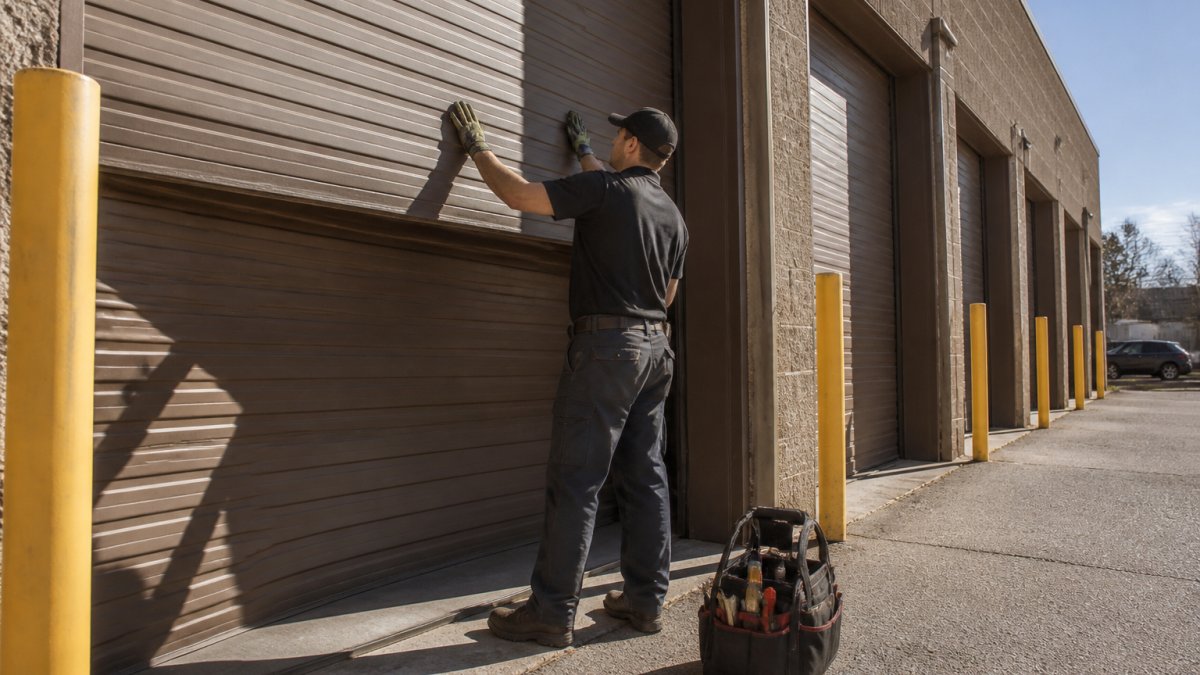
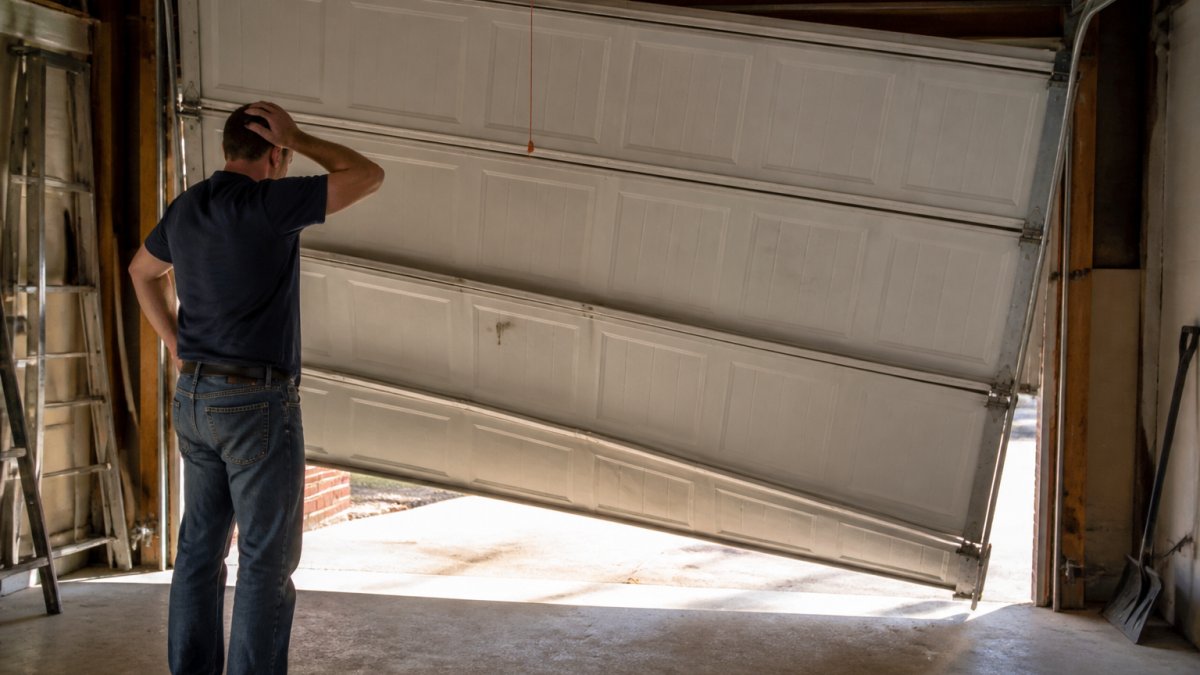
A storefront door that jams at 7:55 a.m. is a business access problem, not an inconvenience. Every hour it stays down is an hour of lost sales, delayed deliveries, or a loading bay nobody can use.
Light Commercial Door Types and Duty-Cycle Differences
The door type decides how it fails and how often it needs attention. Each door type has a duty cycle, meaning how many open-close cycles the operator is built to handle per hour.
A door cycled 40 times a day wears very differently from one cycled four times. Matching the operator to the real traffic is the single biggest factor in reliable operation.
Why Commercial Work Carries Added Risks
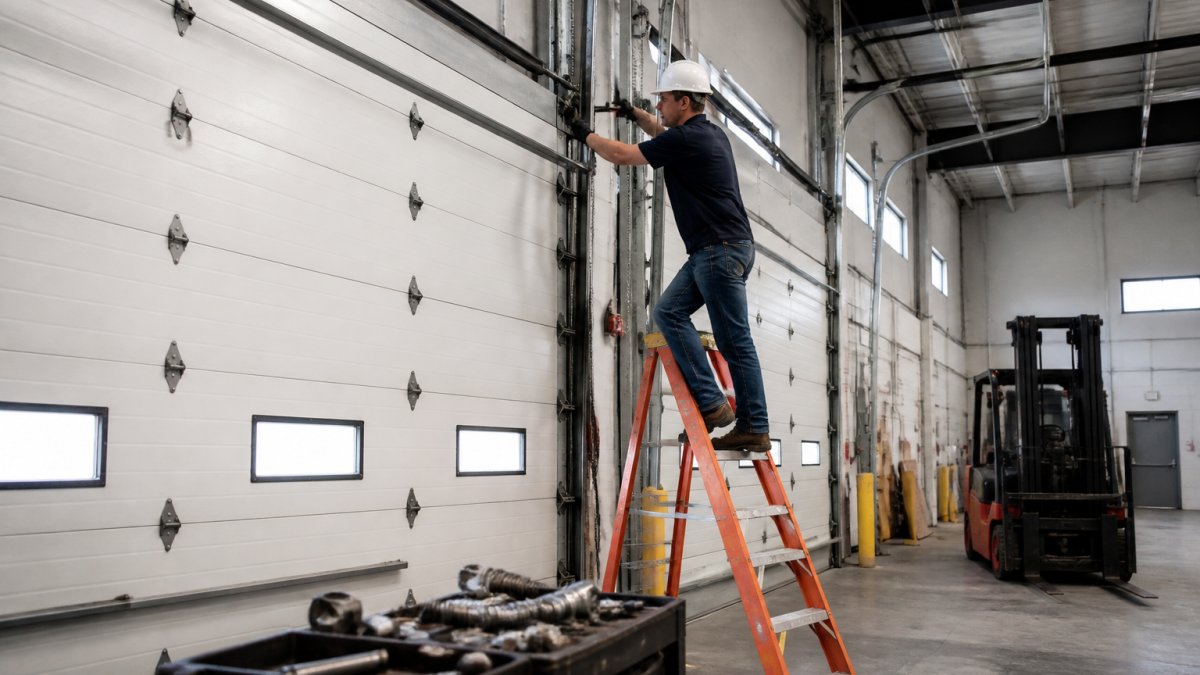
Commercial service includes added risks that residential work rarely presents: higher spring tension, higher shaft lines to work on, and heavier panels.
Watch out: a homeowner who winds a residential spring by hand is taking a real risk. On a commercial door, that same instinct can be genuinely dangerous. JR Doors will service and replace these commercial springs, cables, and panels as well, with the tools and training the job requires.
Commercial Garage Door Spring Repair: Higher Tension, Higher Stakes
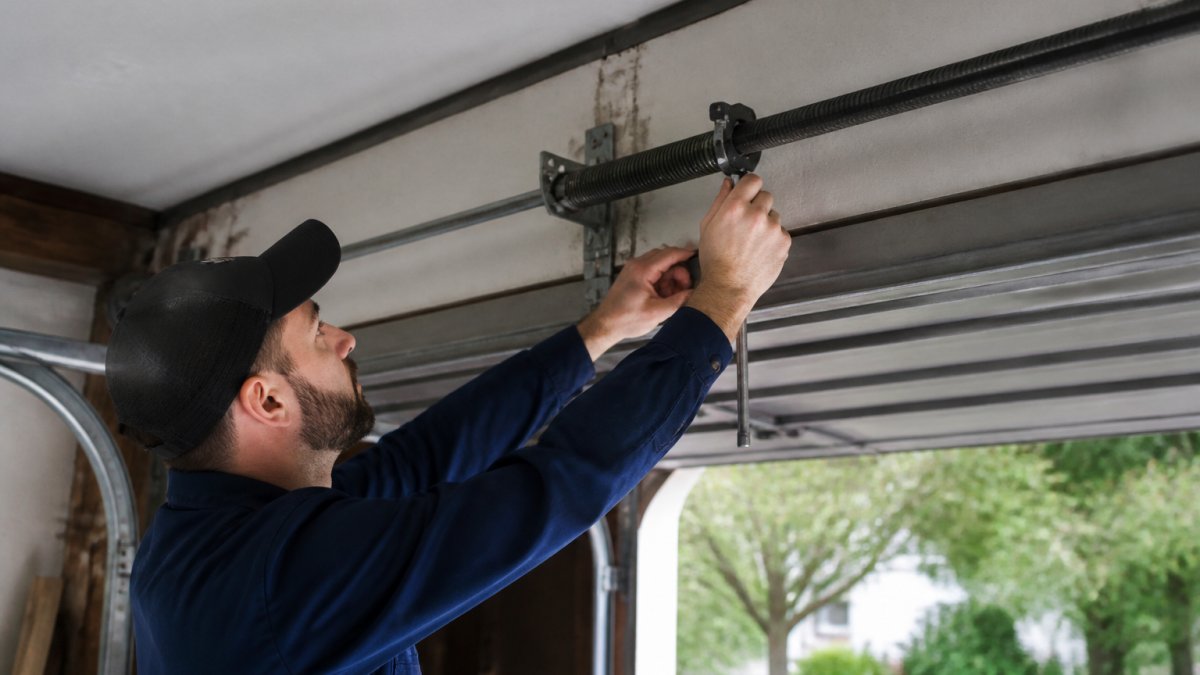
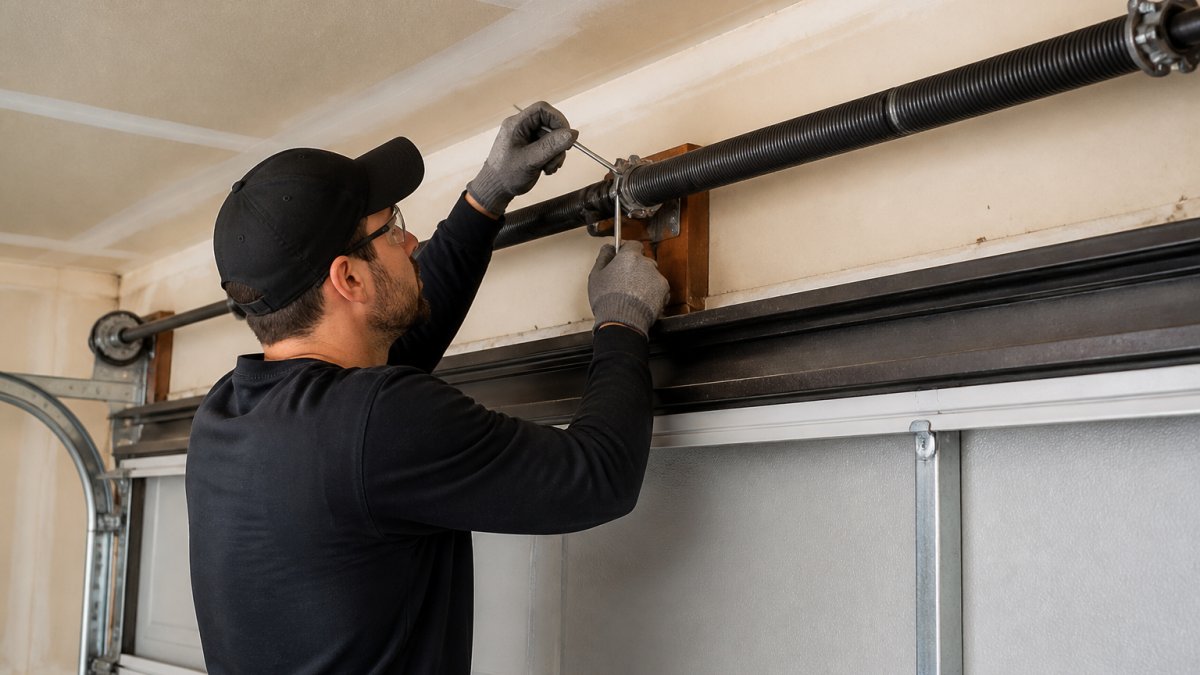
Commercial garage door spring repair is the highest-risk task in the trade, and it is the one most often underestimated.
The fix is not just swapping metal. Spring size and tension have to match the door's weight and cycle count. JR Doors will service and replace these commercial springs as well.
If your door has been sluggish for weeks, that is your warning. Springs weaken gradually before they snap.
Commercial Garage Door Opener Repair for Complex Systems
Commercial garage door opener repair starts with expert diagnostics, because commercial operators are more complex than residential units. They run on a different set of logic boards, safety sensors, and limits.
That complexity is why the openers tend to be more complex and require a professional touch to diagnose and repair. Guessing at parts gets expensive fast. We test the operator, the door balance, and the safety circuit before recommending repair or replacement.
- Opener repair: logic boards, limits, sensors, remotes, and wiring
- Opener replacement: right-sizing the operator to your duty cycle
- Safety testing: confirming the reverse function works before we leave
Light Commercial Garage Door Maintenance That Prevents Downtime
Light commercial garage door maintenance is the cheapest insurance against downtime. A scheduled maintenance service helps catch problems before they strand your business.
A practical preventive maintenance schedule looks like this:
Interval | What Gets Checked | Why It Matters |
|---|---|---|
Monthly (DIY) | Visual inspection, safety reverse test | Catches obvious faults early |
Quarterly (DIY or professional) | Lubrication, roller and hinge check | Keeps operation smooth and quiet |
Annually (DIY or professional) | Spring, cable, and balance inspection | Prevents sudden failures |
As needed | Track alignment, weather seal | Protects security and energy efficiency |
Beyond the schedule, keep a simple maintenance log. Record the date, what was checked, and any adjustments made. This documentation helps you spot recurring issues and gives your service provider a history to work from, which can speed up diagnostics and prevent repeat failures.
Safe Troubleshooting Steps for Light Commercial Doors
Before calling for service, you can safely perform a few checks that do not involve springs, cables, or high-voltage wiring:
- Test the safety reverse: Place a 2x4 flat on the ground in the door's path and close it. The door should reverse on contact. If it does not, the safety system needs professional attention.
- Listen for unusual noises: Grinding, squealing, or popping sounds often indicate worn rollers, loose hardware, or a failing bearing. Note when the noise occurs (opening, closing, or both) to help your technician diagnose.
- Check the photo-eye sensors: Ensure the sensors on each side of the door are aligned, clean, and free of obstruction. A misaligned sensor is a common cause of a door that will not close.
- Inspect the door balance: Disconnect the opener (if your door has a manual release) and lift the door halfway. It should stay in place. If it falls or is very heavy, the springs or balance are compromised, stop and call a professional.
Prioritizing a Failed Door for Business Continuity
When a door fails, not all failures are equal. Prioritize based on operational impact:
- Access and security: A door that cannot close is a security risk. Secure the opening with a temporary barrier and schedule repair immediately. A door that cannot open may block deliveries or customer entry, assess whether an alternate entrance can be used.
- Weather exposure: If the door is on an exterior wall and weather is a factor, temporary sealing may be needed to protect inventory or equipment.
- Operational criticality: A loading dock door that halts shipping and receiving is more urgent than a secondary employee entrance. Communicate with your team about alternate routes and expected repair timelines.
While awaiting service, keep the door area clear, restrict access to trained personnel, and do not attempt to force a damaged door open or closed. A professional technician can assess whether the door can be safely operated manually or must remain secured until repairs are complete.
How to Choose a Qualified Commercial Garage Door Repair Provider
Choosing a qualified provider comes down to four checks: training and insurance, brand familiarity, honest diagnostics, and a clear repair estimate before work starts. Ask how they handle safety on high-tension springs and whether they carry liability coverage. A provider who cannot answer plainly is not the one you want on a ladder above your loading bay.
Ask too whether they will repair what you have or push a full door replacement. A good technician fixes the broken part when the door still has life left.
You can see our garage door products and services to confirm we handle your project before you call.
Schedule Your Commercial Garage Door Service
A failing overhead door puts your business access, security, and daily operations on the line. The right response is a fast diagnosis from qualified technicians and a clear repair estimate.
We service and replace commercial springs, cables, and panels, and we diagnose the complex openers that drive them. We are ready when your door is not.
Get started with JR Doors and More LLC to get your overhead door back to reliable operation.
Frequently Asked Questions
What is considered a light commercial garage door?
A light commercial garage door is the overhead door on a small business property: a shop, storage bay, service garage, or mixed-use building with one or a few doors. These doors are built heavier than residential models and run more cycles per day, so they use stouter springs, thicker panels, and higher shaft lines. Common types include sectional doors, rolling steel doors, and overhead doors. Because they sit between home and heavy industrial equipment, they need a repair provider that works on both residential and light commercial systems.
When should a commercial garage door be repaired or replaced?
Repair is usually the right call when the door structure is sound and the problem is a component: a broken spring, frayed cable, worn roller, or a failing opener. Replacement makes more sense when panels are rusted through, the door is out of square, or repeated failures keep costing you downtime. A qualified technician can inspect the door and give you an honest assessment of which path fits. Ask for a repair estimate before any work begins so there are no surprises.
Why should a professional repair commercial garage door springs?
Commercial springs carry far more tension than residential ones, and the shaft lines sit higher off the ground, so a mistake can cause serious injury. Springs also store energy even when the door is down, which is why they are the most dangerous part of the system to touch. A trained technician uses the right winding bars and follows proper lockout steps. Never attempt a commercial garage door spring repair yourself, and never let anyone without commercial experience near the springs.
How often should a light commercial garage door be maintained?
Most light commercial doors benefit from a maintenance service at least once a year, and busier doors that cycle many times a day often need it twice a year. A preventive maintenance visit covers spring and cable inspection, roller and hinge lubrication, track alignment, balance testing, and a safety inspection of the opener's reversing feature. Regular maintenance catches worn parts before they fail and reduces the chance of an emergency repair call during business hours.